



(044) 221-77-22
- Model:ADR30K167
- SKU:ADR30K167
6 595.00грн.
In stock
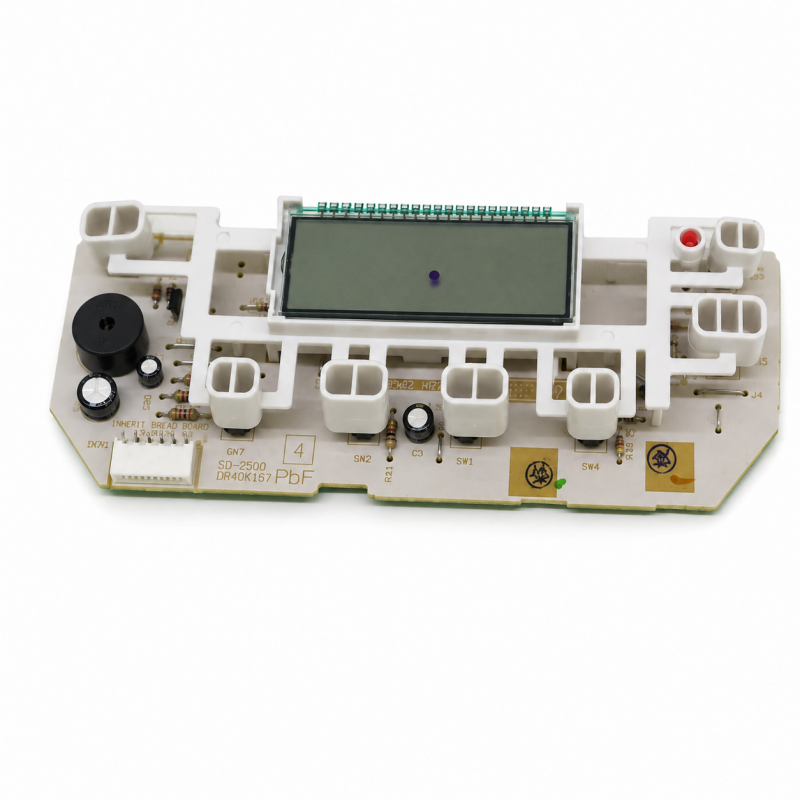
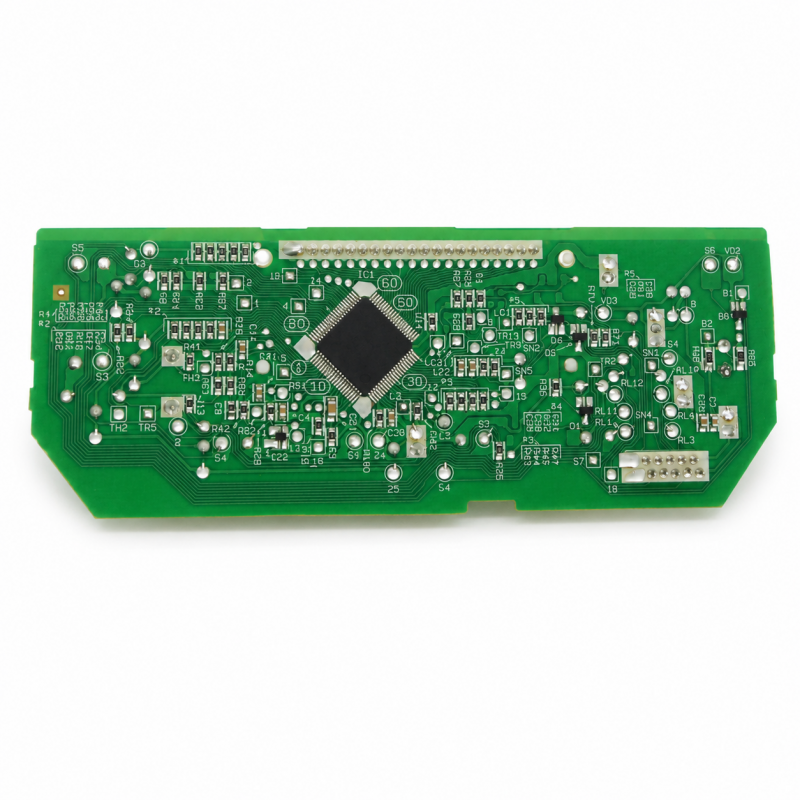
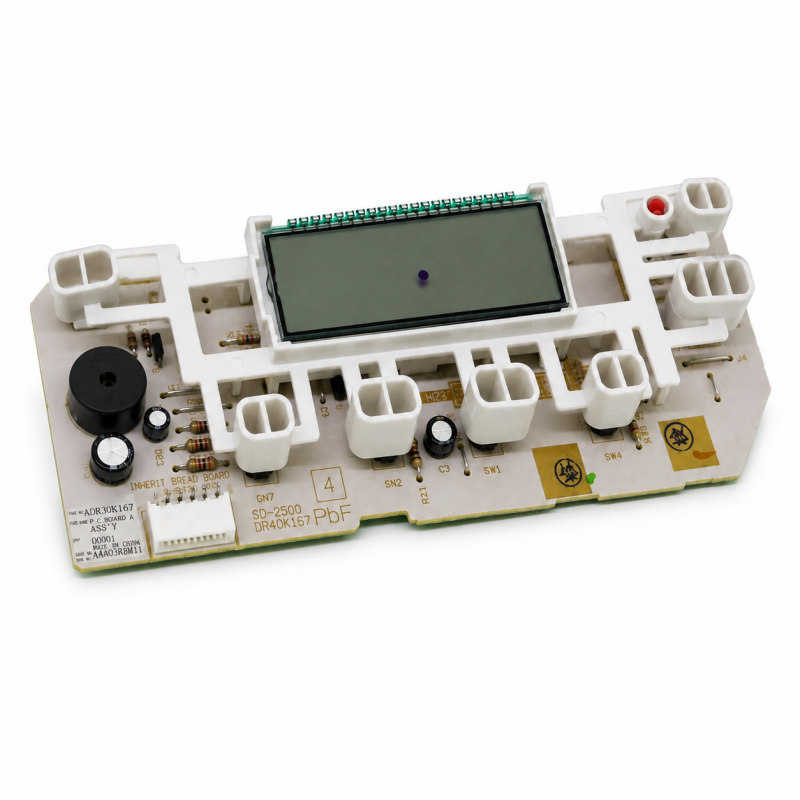
Original Control Board A for Panasonic Bread Maker ADR30K167 (SD-2500, Item No. 11)
Looking for a way to restore the operation of your Panasonic SD-2500 bread maker? We offer the original assembled control board (P.C. Board A Ass'y) ADR30K167 (catalog position No. 11 on the diagram), which serves as the main electronic module of the appliance.
This component is responsible for the complete operating logic of the bread maker, processing user commands, executing baking programs, controlling timers and heating, and displaying information on the built-in screen. The board comes fully assembled with the display and interface elements, guaranteeing precise compatibility and ease of installation.
Main Advantages and Features:
Precise Compatibility: designed specifically for the Panasonic SD-2500 bread maker model (full compliance with standard connectors, cables, and mounting locations).
Fully Assembled Delivery: equipped with a digital display and control elements, eliminating the need for complex component-level repairs or soldering.
Factory Reliability: original electronic components are designed for stable operation in kitchen environments and are resistant to voltage fluctuations.
Simple Installation (Plug-and-Play): replacement is carried out by connecting to the standard connectors without any additional modifications.
Technical Specifications:
Product Type: Control Board A Assembled / Electronic Unit (P.C. Board A Ass'y)
Manufacturer Part Number: ADR30K167 (also labeled as A4A038001 / DR40K167)
Catalog Diagram Number: Position No. 11
Compatible Model: Panasonic SD-2500
Condition: new, branded factory build
When is a Control Board Replacement Necessary?
Complete device failure: The bread maker does not turn on, the screen does not light up, and there is no response to button presses (assuming the power cable and fuse are intact).
Microcontroller malfunctions: Programs freezing midway through a cycle or chaotic flashing of indicators.
Damage to the microchip: Resulting from moisture ingress, a short circuit, or a sudden power surge in the electrical grid.